The fall of the department store
While researching a department store for our recent project
it became evident that department stores are in real trouble. I wanted to
educate myself more on this big shift that is currently happening in the world
of retail, that I could one day be working in.
M&S announced plans to close more than 100 of its stores
by 2022. House of Frazer announced a company voluntary arrangement, proposing
31 store closures (more than half of its its UK and Ireland stores). Debenhams
issued its third profit warning and is also closing stores. And of course, we
all knew about the epic fall of the BHS chain.
All of these quite depressing statistics left me wondering
why? Why is it that so many of these mid-market department stores are failing,
when they used to be the backbone of retail. From my research I found a number
of reasons;
One of the reasons was that the fashion aspect of the stores
was not up to date. The fashion industry has become increasingly competitive,
with the constant stream of cheap, fast and fashionable products. The
department stores seem to have a very average in-house selection, with other
brands that you could buy in a number of other places. This is one of the
reasons that the stores are failing and need to improve. People expect fast, up
to date and affordable fashion, and if perhaps department stores can’t keep up,
they should stop trying and failing in the fashion area and focus on its other
strengths.
Another area that the department stores have seemingly
failed was with the frantic mass discounting. This almost tarnished the brands,
and in my opinion makes them look desperate in a race to the bottom.
The main reason for the decline of department stores, and
all high street stores is however the online competition. A third of UK
shoppers go online before shopping in store. If the online customer decides to
go in store to find the few bits they couldn’t find, they are more likely to
visit a more specific store, rather than a big and maybe overwhelming
department store. A recent survey also showed that 64% of customers left stores
due to poor customer service. This is a problem that is majorly reduced with
online shopping.
Although all department stores have seen a decline in
profits, some are seemingly defying the odds. They have managed to keep their ‘heads
above water’, while keeping the brand image strong, relevant, and intact.
The main way that these stores have achieved this, is by
really buying into this idea of store experience. Store experience is used to
differentiate from any online or other simply transactional retail experiences.
The aim is for the stores to create an exciting, enjoyable and tangible experience,
rather than just shopping.
Macy’s is an example of a store that has embraced the store experience
side of retail. They recently introduced
innovative VR technology, enabling customers to try out furniture in a 3D
replica of their living rooms.
Selfridges is another example with their use of in store art
instillations, done by brands such as Louis Vuitton challenging the meaning of
Luxury. This turned the store into an art exhibition style experience.
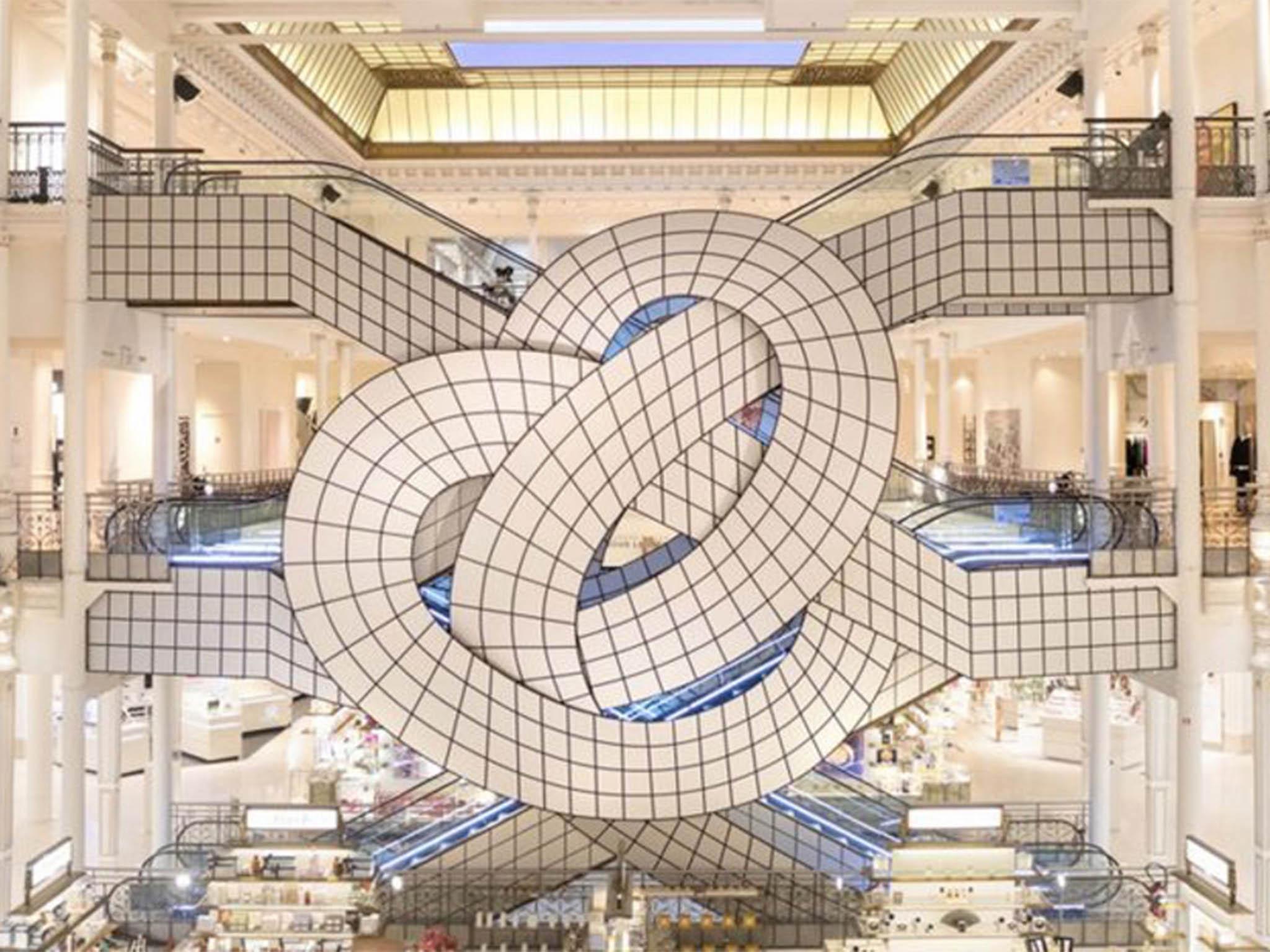
Le Bon Marche, in
Paris used the space in the stores in itself, to create an art spectacle
created by famous artists, that people had to experience for themselves.
Many of the more successful stores also place huge emphasis on
creating a community of trusting clients. They do this rather than constantly
branching out and re-branding to new target markets. They embrace and market on
the loyalty of the consumer base.
John Lewis is just about managing to remain a successful department
store. To me this is due to its constant delivery of good quality, reliable
products. They definitely have a clear market of older, middle class, successful
adults looking/striving for some level of luxury.
A reason for the success of higher-end department stores,
above mid- market seems to be the embracing their differences to stand out.
Liberty’s, for example is a one of a kind, oriental, miss-mash of a department
store. They have fully embraced this fully, and have really made themselves,
and the store experience stand out among the more trend driven stores.
If these failing stores, in their own way adopted some of
these methods, perhaps there is still some hope for the department store. One
thing for sure is that the department store market will never be as popular and
saturated as it once was.
Comments
Post a Comment