Cultural Misappropriation
Cultural misappropriation, also known as cultural
appropriation, is when people or in these cases brands, adopt elements from a
minority culture, and make it appropriate for members of the dominant culture.
A major hot topic at the moment is cultural appropriation in fashion.
Cultural appropriation in fashion has been happening for
what seems like forever. However, the recent combination of the eagle-eyed
consumer, picking up on every detail on the catwalk, and the uncontrollable
power of social media, the impact of this in fashion is much larger, and can
offend a considerably wider audience.
Cultural appropriation can be seen by an individual posting
an unfortunate fashion decision on social media, and it is going viral with
outrage, but also by big and influential fashion brands. I can understand the
odd individuals reckless fashion choice, that wasn’t intended to go so public culturally
offending some people. It is the larger Brands however, that you would think to
have researched and forecasted such outrage from their choices a lot better
than they have.
Just this year it was one of the most renowned and influential
brands currently, that where in the spotlight for perhaps the most careless example
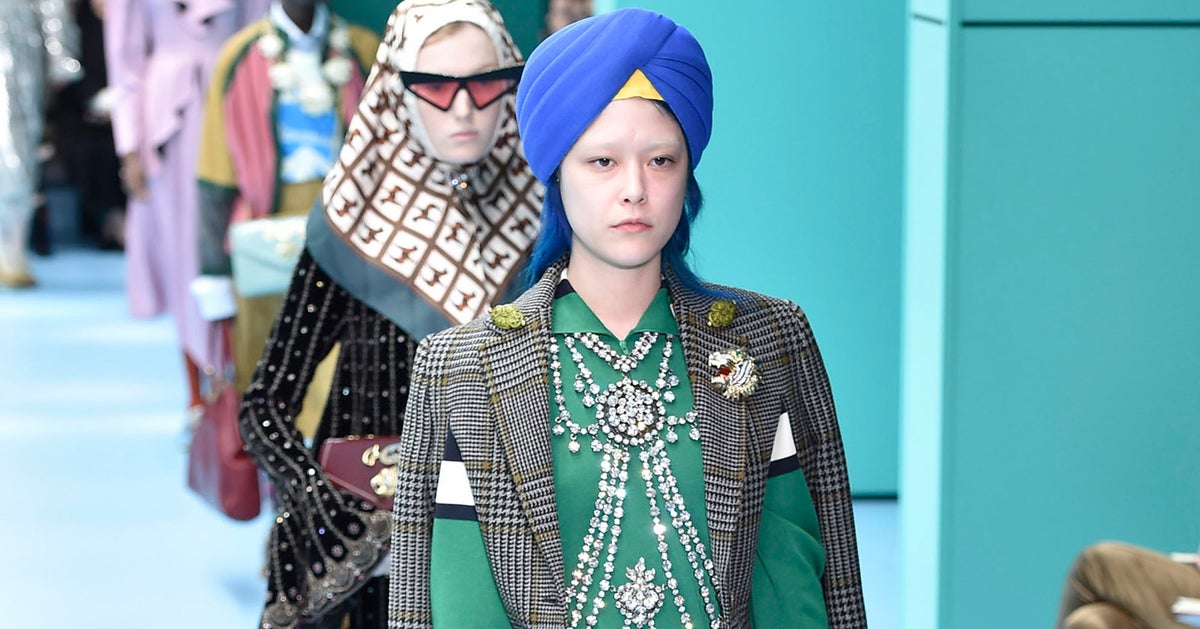
of Cultural misappropriation the fashion industry has ever seen. Gucci put
turbans on their models for a catwalk, simply as fashion accessories. Members
of the Sikh religion where understandably offended by the use of a deeply symbolic
and important religious statement being used in this way. I shocked by the lack
of consideration by such a large brand, which would have involved teams of
people who also failed to see how this would offend. However, I was also so surprised
that something like this could happen in this day and age, where people are a
lot more educated culturally, and don’t have the same excuses they may have in
the past, especially not a mainstream brand like Gucci.
Another recent example of cultural appropriation shown by a
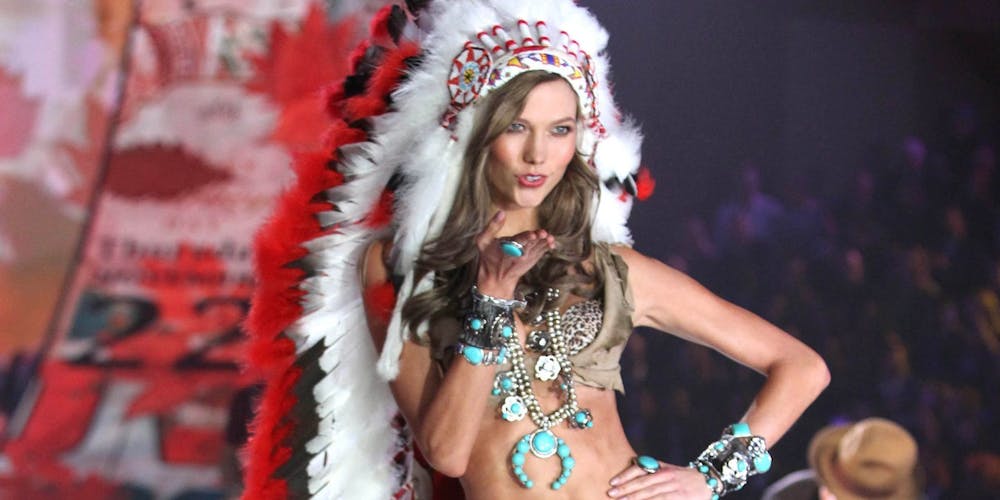
big brand was in the 2017 Victoria’s secret show. The use of native American style
headdresses on the catwalk was seen as copying and devaluing aboriginal culture
by some. Others argued that as this wasn’t as much of a current culture, as it
was a part of history, this wasn’t as bad as the Gucci example. However, such a
big brand does not have any excuse for not seeing how this may offend a
culture, by appropriating past of its history.
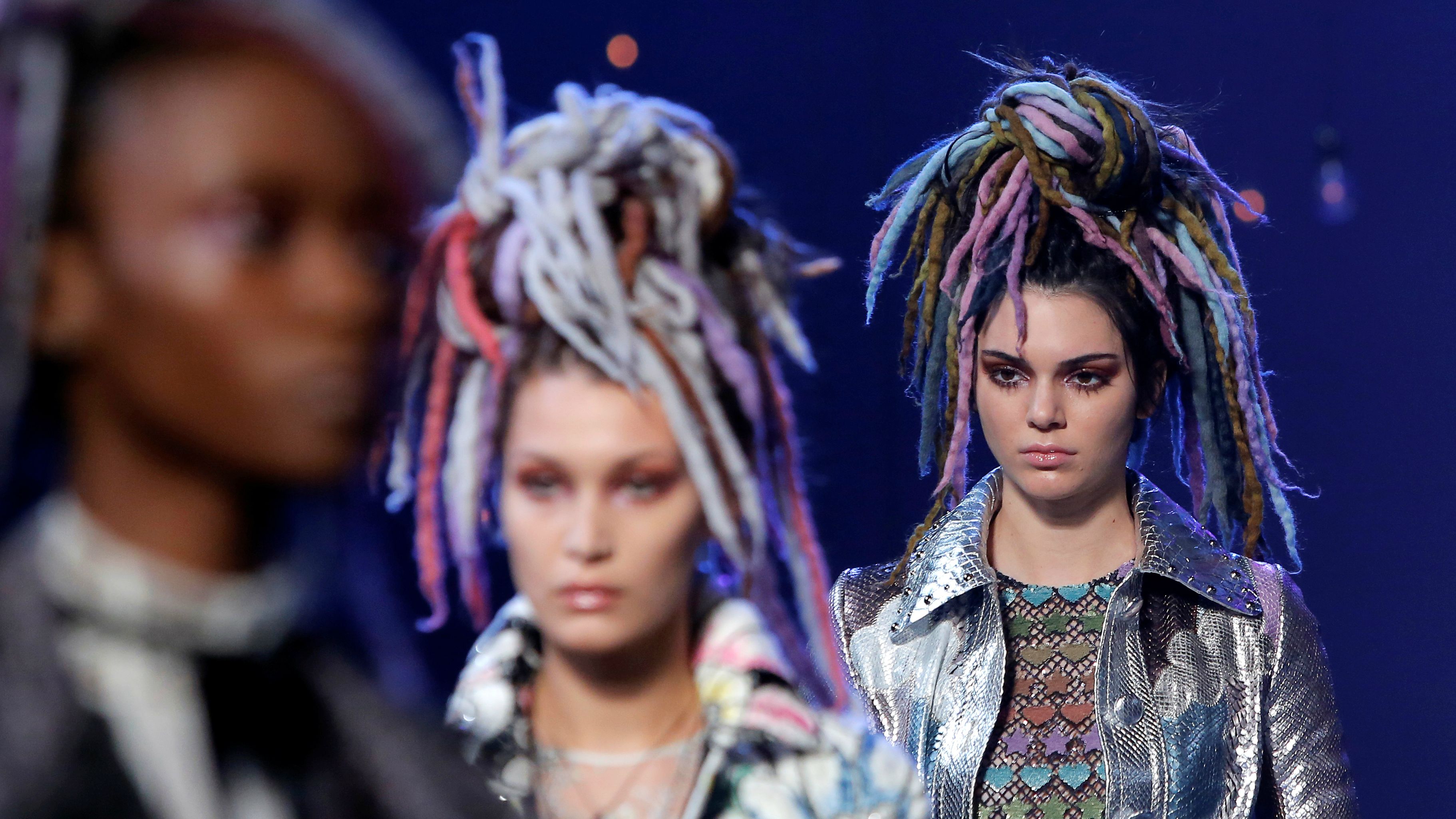
Marc Jacobs also came into fire when they used dreadlock headdresses
on their mainly white models. People often see this hairstyle as associated or
belonging to black culture, and where therefore offended by this. Others however
argued that hairstyles should no longer be something specific to race, and that
by still pinning it to a certain race or culture, that in its self is racist.
In examples like these it is clear that people disagree, and
that what people consider cultural misappropriation varies. I do believe
though, that bigger brands with so much influence on social media cannot afford
to make such potentially offensive mistakes. The larger brands have a responsibility
with their success, to be aware of the times, of people picking up and analyzing
everything. They should always research the contexts of their ideas thoroughly
as they know the large variety of people their content can reach. The examples
above I do not believe have done this, and I see their attempts and lazy and
insensitive.
When researching I started to think about some
of the reasons why cultural misappropriation is still around, and even becoming
more common recently. I think that the bottom line is that designers are desperate
for ideas and sales. The Fashion cycle of the old styles constantly coming back
around has always worked. However, with this much faster fashion industry, and
consumers and brands constant hunger for new styles, designers feel pressured
to come up with new ideas. With the knowledge that new ideas are often successfully
influenced by the old they have taken it too far. Designers have began to delve into styles of cultures that
still have relevance, and deep meaning to people in the culture.
Overall I believe that designers (particularly of larger
brands) need to be more mindful of the line between using the past and cultures
as inspiration, and aspects of culture that is still very significant for those
people and would not be received well when used as Fashion.
Comments
Post a Comment